



Author: Dick’s Hillsboro Hyundai
Welcome to your locally tailored maintenance guide for Hillsboro drivers, brought to you by Dick’s Hillsboro Hyundai. With over three decades of experience serving our community, we understand the unique driving conditions you face on local roads like Tualatin Valley Highway and Cornell Road. This guide is crafted to reflect the specific needs of vehicles in Hillsboro and surrounding areas, including Beaverton, Cedar Hills, and Portland, taking into account our local climate and terrain. Whether you’re commuting to Intel or running errands around town, we aim to ensure your Hyundai stays in top shape for every journey.
Why Should You Follow a Maintenance Schedule for Your Hyundai?
Following a maintenance schedule is essential for protecting your investment and ensuring your Hyundai remains a trusted companion on local roads, particularly in the unique climate of Hillsboro, Oregon. Here, the humid summers and heavy pollen can stress your vehicle’s fluids, belts, and filters, making regular service vital to combat these local challenges. For instance, the frequent stop-and-go traffic along Tualatin Valley Highway or Cornell Road can wear out components faster than you might expect.
Keeping up with your maintenance schedule not only enhances performance and fuel efficiency but also significantly contributes to your safety on the road. A well-maintained Hyundai, whether you’re commuting to Intel’s Ronler Acres campus or heading to Jackson Bottom Wetlands Preserve for a weekend outing, can provide peace of mind that your vehicle is operating as intended. This means fewer breakdowns and a smoother ride on the diverse terrains of Oregon. For more insights on vehicle care, resources like Edmunds offer a wealth of information.
How Does Hyundai’s Service Reminder System Work?
Hyundai vehicles are equipped with systems that help notify you when it’s time for routine maintenance. Depending on your specific model and year, this reminder can either be based on a simple time or mileage counter, or it may adjust according to how you drive. This dual approach ensures that you’re prompted to check on necessary service when it’s most relevant for your vehicle.
When a service reminder is due, you might see a dashboard message, a service indicator like a wrench light, a maintenance reminder, or an oil-life percentage display. The specifics can vary from model to model, so it’s always a good idea to consult your owner’s manual for details. Also, local driving habits around Hillsboro, such as frequent short trips, stop-and-go traffic on Tualatin Valley Highway, or changes in temperature, can influence how often you need to service your vehicle.
What Does the Primary Service Reminder Mean?
After understanding how service reminders work in general, the next step is knowing what the primary reminder indicates for your vehicle. This reminder serves as a high-level alert that scheduled maintenance is due or approaching. Depending on the model, some Hyundai vehicles may display a simple message or light, while others might provide a more detailed maintenance menu or additional indicators. Because the specifics can vary significantly by model and year, the best resources for understanding what maintenance is needed are your vehicle’s owner’s manual and the in-vehicle maintenance display.
Primary reminder: A general signal that prompts you to check your vehicle’s maintenance schedule and plan for upcoming service. It suggests that maintenance is due without necessarily detailing each specific item.
Additional details (if shown): Some vehicles may offer further information through a maintenance screen, descriptive messages, or symbols that clarify what needs attention. If your vehicle provides these details, refer to them alongside the owner’s manual for precise guidance on required services.
What Do Additional Service Indicators Mean?
Some vehicles can provide extra details beyond the primary service reminders, such as additional items, symbols, or menu entries. These indicators can help clarify what specific maintenance may be due, though their meanings can vary by model. Here are some common examples of service items you might encounter:
- Tire rotation: Regular tire rotation promotes even tread wear, which is important for handling, especially with the frequent stop-and-go driving in Hillsboro and highway trips to Portland.
- Engine and cabin air filters: The engine air filter ensures proper airflow, while the cabin air filter maintains interior air quality. Local conditions, like dust and pollen in the spring, can clog these filters over time.
- Transmission fluid: Keeping an eye on transmission fluid is essential for long-term maintenance. Frequent short trips or stop-and-go traffic can create more heat, stressing the transmission.
- Spark plugs and valve clearance check (when applicable): These items are crucial for engine performance, often scheduled for higher-mileage vehicles or specific time intervals, ensuring smooth operation.
- Engine coolant: Proper coolant levels are vital for regulating engine temperature. Hot weather and extended driving can increase the need for coolant maintenance.
- Rear differential fluid (AWD/4WD, if equipped): For vehicles with AWD or 4WD, monitoring differential fluid is key, especially after driving in wet or uneven conditions around Hillsboro.
- Brake fluid: As brake fluid ages, it can absorb moisture, impacting performance. It’s important to follow the recommended service intervals for your vehicle.
What is a Typical Hyundai Service Schedule for Hillsboro Drivers?

While your vehicle may have built-in service reminders, understanding a typical schedule for maintenance can be a valuable planning tool. This outline is designed to complement your owner’s manual and any in-vehicle guidance, if available, helping you anticipate necessary service intervals. It considers common driving patterns in Oregon—think short trips around neighborhoods like Orenco Station, stop-and-go traffic on Tualatin Valley Highway, and those longer stretches on I-5 through the scenic Willamette Valley—without implying that your vehicle measures these conditions.

What Services Are Needed in the First 30,000 Miles?
In the initial 30,000 miles of ownership, Hyundai drivers often focus on essential services like routine oil changes, tire rotations, and air filter checks. The timing for these services can vary based on the specific model, driving habits, and manufacturer recommendations.
Oil service: Typically, many Hyundai vehicles may require oil changes depending on how you use your vehicle. If your driving involves frequent short trips or stop-and-go traffic—like that often experienced on Hillsboro’s Cornell Road or while navigating through Beaverton’s busy streets—you might find that oil service is needed sooner than if you primarily drive on highways.
Tires and filters: Tire rotations are a common part of maintaining your vehicle early on, usually scheduled to promote even tire wear. Additionally, keeping an eye on your engine and cabin air filters is wise, especially since local environmental factors like pollen and dust from construction sites can clog them more quickly.
What Maintenance Should Be Done Between 30,000 and 60,000 Miles?
Between 30,000 and 60,000 miles, maintenance often shifts from basic upkeep to more comprehensive care that protects vital systems in your Hyundai. This period typically includes essential fluid services and frequent inspections, depending on your specific model, powertrain, and driving habits. Always refer to your owner’s manual and in-vehicle maintenance reminders for the most accurate recommendations.
For a deeper dive into vehicle reliability and owner experiences across models, you can check out Consumer Reports.
What Major Services are Required Approaching 100,000 Miles?
As your Hyundai approaches the 100,000-mile mark, certain key maintenance services often become a focus. While specific requirements can vary by model and engine type, it’s essential to consult your owner’s manual for the most accurate information applicable to your vehicle.
Spark plug replacement: Replacing old spark plugs can enhance efficiency, improve starting, and ensure a smoother drive—especially as wear accumulates over years of use.
Timing belt and coolant service: If your Hyundai is equipped with a timing belt, it may need replacing, particularly if it’s an older model. Additionally, a coolant flush or replacement is typically advised to safeguard your cooling system from corrosion and overheating in the long run. Staying on top of these maintenance items not only supports reliability but can also enhance your vehicle’s resale value.
Why is Local Expertise Important for Servicing Your Hyundai?
Having a service team that understands the unique driving conditions in Hillsboro is invaluable for maintaining your Hyundai. The local climate, characterized by wet winters and warm summers, creates specific demands on vehicles. For instance, the high heat and humidity can strain air conditioning systems and engine coolants, while the region’s clay soil can lead to unique wear on tires and brakes. Additionally, pollen in the spring can clog air filters more quickly than in other areas, making regular inspections crucial.
At Dick’s Hillsboro Hyundai, our technicians are well-versed in these regional factors. They know to check for wear patterns caused by the stop-and-go traffic on Tualatin Valley Highway and the frequent short trips common in neighborhoods like Orenco Station. This insight ensures every aspect of your vehicle is tailored for the local environment, enhancing safety and performance. For more information on vehicle safety and maintenance, you can visit the National Highway Traffic Safety Administration (NHTSA).
Frequently Asked Questions (FAQs)
How often should I really change my oil for my Hyundai in Hillsboro’s climate?
Your Hyundai’s service reminder or owner’s manual is the best guide for oil change intervals, especially for those commuting on busy roads like Tualatin Valley Highway.
Are all-season tires sufficient for driving in and around Hillsboro?
High-quality all-season tires generally perform well for most of the year in Hillsboro, offering good traction for our rainy winters and dry summers.
Does commuting on local highways impact my vehicle’s maintenance schedule?
Yes, frequent stop-and-go traffic, particularly on congested routes like Cornell Road, can affect your vehicle’s maintenance needs.
How often should I change my cabin air filter in the Hillsboro area?
It’s wise to inspect your cabin air filter annually, especially after the heavy pollen season in spring.
Is all-wheel drive (AWD) beneficial for driving in Hillsboro?
While not essential for everyone, a Hyundai with available AWD can enhance stability and traction during Hillsboro’s rainy days.
What maintenance schedule should I follow for older Hyundai models without a service reminder?
For older vehicles lacking a service reminder, refer to your owner’s manual for specific service intervals on filters and fluids.
About Dick’s Hillsboro Hyundai
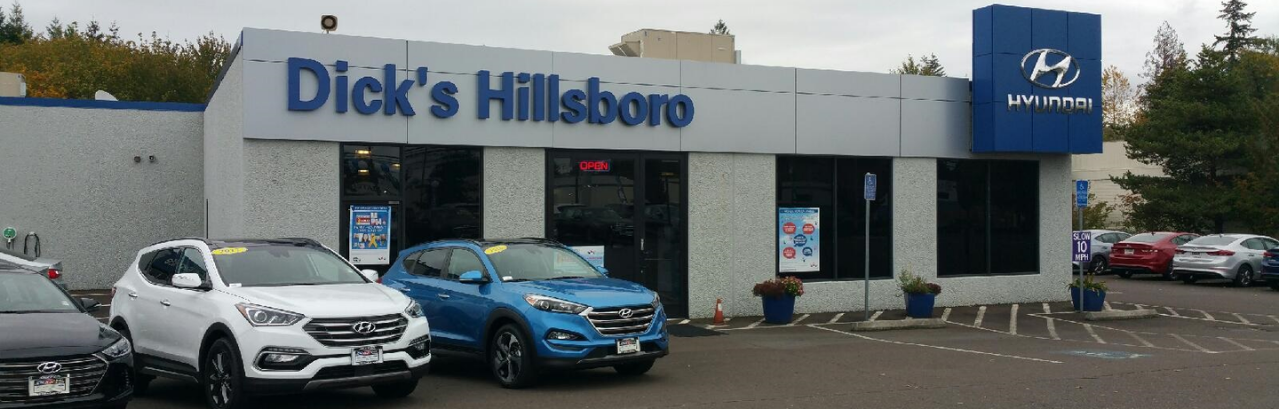
At Dick’s Hillsboro Hyundai, our team is dedicated to sharing our expert automotive knowledge with you. As a family-owned and minority-owned business, we have built a reputation for trust and excellence since 1985. We provide a stress-free experience with our unique one-person sales model and employ Hyundai Master technicians to care for your car. Beyond the showroom, we proudly support the Boys and Girls Club and the Inukai Family Foundation. We hope this article helps you, and we look forward to welcoming you to our pet-friendly dealership.
Related Articles:
The Ultimate Guide to Finding the Best Hyundai Dealer in Hillsboro, OR
Connect with us


Dick's Hillsboro Hyundai

Address
2871 SE Tualatin Valley Hwy
Hillsboro, OR 97123
Phone
- Main 503-640-6401
- Sales 971-441-5560971-441-5504
- Service 971-441-5516
| Monday | 8:30AM - 7:00PM |
| Tuesday | 8:30AM - 7:00PM |
| Wednesday | 8:30AM - 7:00PM |
| Thursday | 8:30AM - 7:00PM |
| Friday | 8:30AM - 7:00PM |
| Saturday | 8:30AM - 7:00PM |
| Sunday | 10:00AM - 7:00PM |
| Monday | 7:30AM - 6:00PM |
| Tuesday | 7:30AM - 6:00PM |
| Wednesday | 7:30AM - 6:00PM |
| Thursday | 7:30AM - 6:00PM |
| Friday | 7:30AM - 6:00PM |
| Saturday | 8:30AM - 4:00PM |
| Sunday | Closed |
| Monday | 7:30AM - 6:00PM |
| Tuesday | 7:30AM - 6:00PM |
| Wednesday | 7:30AM - 6:00PM |
| Thursday | 7:30AM - 6:00PM |
| Friday | 7:30AM - 6:00PM |
| Saturday | 8:30AM - 4:00PM |
| Sunday | Closed |